Cabin Fever 2018

Cabin Fever 2018

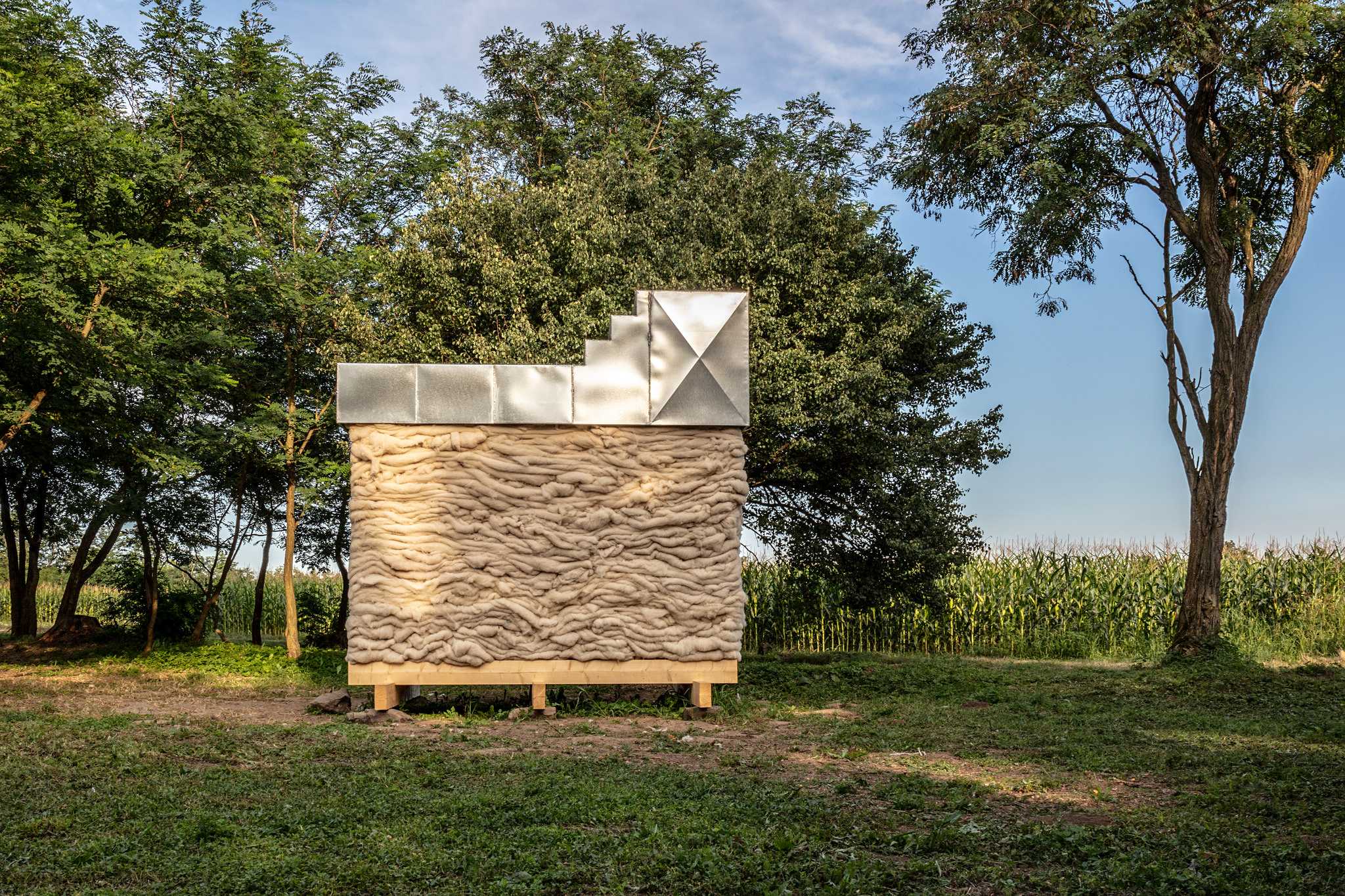
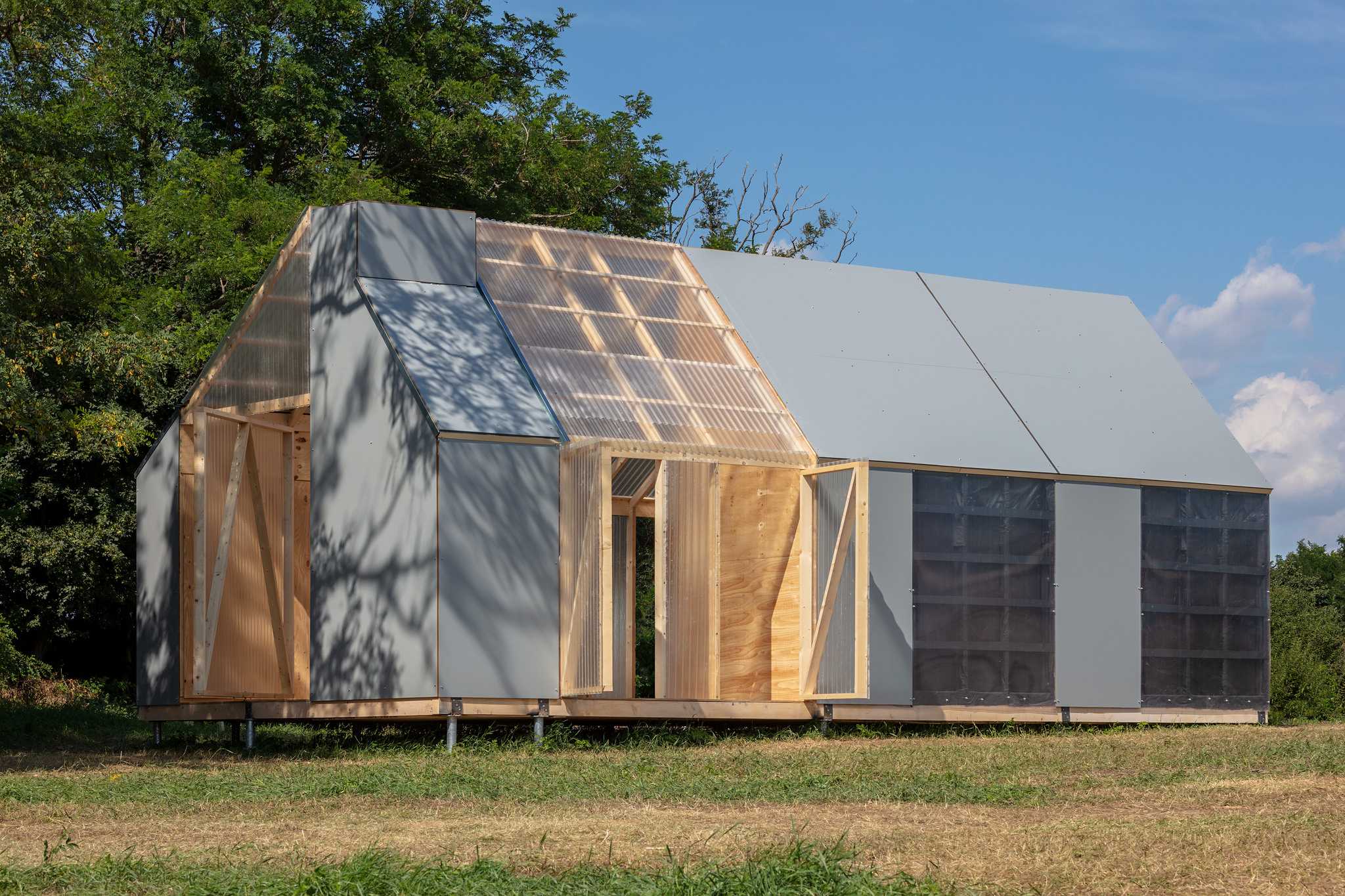
In 2018 Hello Wood International Summer University and Festival students got the chance to build seven contemporary cabins. As part of the week-long Cabin Fever programme, participants were mentored by international architects – Hungarian AU workshop and Marton Low, Czech H3T architekti, Italian ZarCola, Spanish architect Josep Garriga and OfficeShophouse, Argentinian iR arquitectura and Swiss frundgallina –  constructing tiny houses in a collaborative process. In the future, these moveable, liveable and unique wooden cabins could even become prototypes for boutique accommodation in popular weekend destinations. Hello Wood is a European offshoot of the Tiny House Movement and makes cabins which give urban dwellers the chance to get away from it all for a while.

Grand Cabin Club

Even the shape of the building makes you think of cosy evenings playing board games with friends. Its A-shape gives it a nostalgic feel, especially for Central Europeans familiar with the Czech-style mountain lodges which inspired its design. The Grand Cabin Club compensates for some of the downsides of classical forms. It was built using pre-fabricated, made-to-measure wooden panels by Berger Houses and its huge glass windows offer magnificent views of the surrounding countryside. The cabin can comfortably accommodate eight people, but as many as twenty people could fit inside for a party. This was made possible because the builders did not separate the central space with walls or floors. What’s more, the two bedrooms and the bathroom are in ‘boxes’ which are accessible from the inside but actually joined onto the outside of the cabin.

Users will be able to make use of similar environmentally-friendly cabins in the future thanks to the technology behind this contemporary Hungarian pre-fabricated house.

I am a monument

A new take on an abandoned project from a previous Hello Wood camp, this stilt house provides shade and refuge, and almost appears to hover in the surrounding landscape. Although the builders used their own ideas to improve the existing structure, they also respected its current features. This approach is in line with the architectural principle which states that a building is never finished – over time it is always transformed according to the needs of those using and renovating it. The name ‘I am a monument’ was chosen to honour the previous builders’ efforts. This year, a roof and an upper floor with side walls have been built on to the existing stilts. The cabin extends upwards and is designed to ensure that at ground level it interferes as little as possible with nature and that it leaves as few traces as possible. At the same time, it tries to give users as many opportunities as possible to get close to nature. While the upper floor offers a more private, protected space suitable for rest and relaxation, the ground floor is open, and daily chores can even be carried out in the open air. Last but not least, there are magnificent views from the roof. Those who climb to the top will be able to enjoy and take in a stunning panoramic view of the surrounding countryside.

Treehouse

It is the small details, such as the closed and tilted angles of the sides that define the final look, minimalist form and considerable (12.5m) height of the Treehouse. As it is not a classic cubic structure, the inward-leaning triangular walls significantly reduce the interior space in the cabin. The only way of expanding the living space was therefore for the builders to increase the height of the building. It is fair to say that it is the small details that define the Treehouse, and not the other way around. The builders very much concentrated on the details before focusing on the whole.
The Treehouse is a haven and functions almost like a lighthouse for lost travellers. People inside can put a light on the roof of the wood-panelled cabin to signal to travellers that they are more than welcome to visit.

Vertical Cabin

Wheels have been fitted to one side of this vertical cabin, making it highly portable and therefore allowing users to set it up wherever they like. However, the wheels are not fitted to the bottom of the cabin, but to the longest side, so it must be placed in a horizontal position before it is transported to the desired location. The cabin was initially put together in a horizontal position, and although the light wooden structure can be moved into vertical position using human force and ropes, the roof is heavy and must be fitted on to the building by crane.
This project was unusual compared to other projects this year, as the vertical cabin was made from re-used materials. The builders worked with scrap material that had been left behind by other teams from previous years.
As the whole cabin is based on the concept of mobility, it is worth taking this into account when fitting out the interior: the simplest solution is to fix the furniture to the walls.

Watch the aftermovie to get in the mood

Previous Hello Wood Summer Schools

Win awards with us!​